There Are Things Money Cannot Buy
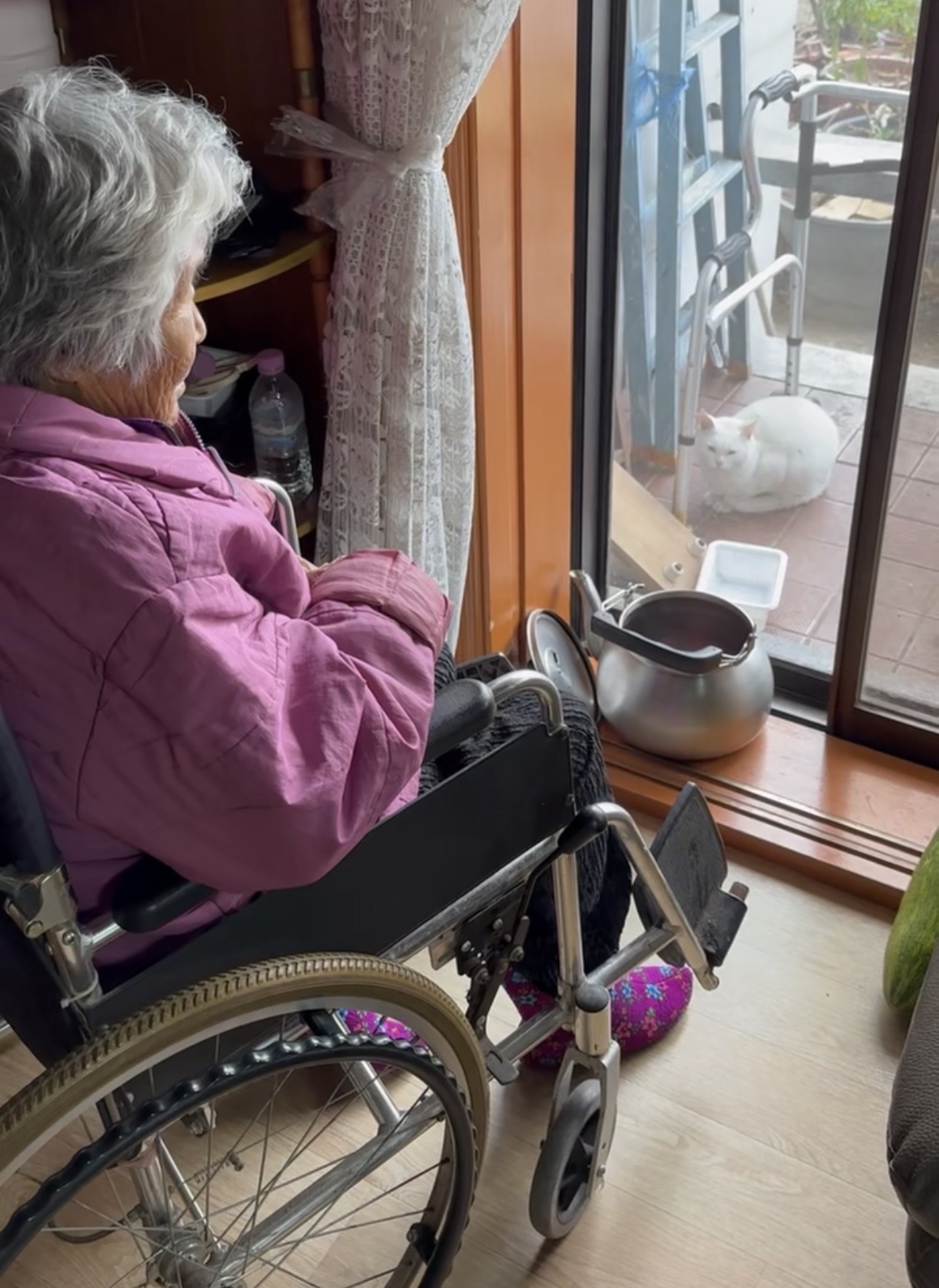
On Monday in the early hours of the morning, my maternal grandmother passed away. At the very moment she left this world, my AirPods sitting on a charger in the study let out a soft beeping sound. I woke in the night, unplugged them, and checked the time — it was 5 a.m. Grandmother had passed at 4:50. Perhaps she stopped by our place in Bundang to say her goodbyes on the way. I’ll never know.
Her last wish was that the funeral not be held in Seoul, but in Jeongeup. She wanted the people from Ssangchi to be able to come and pay their respects more easily. Grandmother was someone who could hold her drink and carry a tune — she was the life of the village. Then one ordinary day, after sharing a drink at the senior center behind the house, she fell climbing over the wall on her way home, and after that she could no longer walk. Not long after, Grandfather was diagnosed with lung cancer, and the family brought him to Seoul for chemotherapy and care. Grandmother was left behind in the Ssangchi house, alone, with legs that no longer carried her well. Grandfather couldn’t outlast the cancer. After about a year of treatment, he was gone. The two of them, who had been so deeply devoted to each other, parted forever without ever seeing one another again.
Even after that, Grandmother’s life went on for another ten years. Sadly, not long after Grandfather died, Uncle Giju was also diagnosed with lung cancer. He came back to fight the illness from the Ssangchi house where Grandmother lived alone. He lasted six more years. On the day Uncle Giju died, a single bee flew into that empty house. Grandmother looked at it and thought: our Giju is gone. From then on, she would often say she couldn’t understand why Grandfather hadn’t come to take her too. And yet — she kept feeding the stray cat Uncle Giju had raised with such love, while shooing away every other stray with thrown stones and raised her voice. She delivered passionate monologues about her favorite contestant on Mr. Trot and why Huijae was so adorable. Even on unsteady legs, she tended to beautiful flowers in the yard, and always made sure to send us home with delicious side dishes. Every New Year, she handed us envelopes with pocket money inside, each one inscribed in her handwriting: Minsok-ie, have lots of luck in the new year. I lost that envelope. I will be sad about it for the rest of my life.
The last three years of Grandmother’s life were spent not in the Ssangchi home where she had lived her whole life, but in a care hospital in Seoul. Her health had become unpredictable, and the family all lived in Seoul. My aunt and uncle took turns visiting her at the hospital every single day — something that would have been impossible had she remained in Ssangchi, four hours away. Still, I always wished she could have been home instead. I had already learned, back during Grandfather’s chemotherapy, that I couldn’t change the adults’ decisions — so I never said a word.
My mother felt the same way. She had promised Grandmother that in April, when the cherry blossoms bloomed, they would go together to see them in Ssangchi. But from March onward, Grandmother’s health declined sharply and she had to be moved to the ICU. The family had differing views on end-of-life care, but in the end they did everything they could. And so, on May 18th — the very day after the tenth anniversary of Grandfather’s passing — Grandmother too left this world.
On the final day of the funeral, we traveled from the funeral home in Jeongeup to the crematorium in Namwon, and then over winding mountain passes to the burial site in Ssangchi. Rain fell heavily. We carried Grandmother’s portrait and urn in a slow circle around the Ssangchi house. The promise my mother had made — let’s come back when the cherry blossoms bloom — had gone unfulfilled. The only way Grandmother could return to Ssangchi today was like this, and that was almost too much to bear. We held a noje — a roadside rite — at the yeollyeomun arch at the entrance of the village. The neighbors who had sung with Grandmother, drunk with her, and shared food with her all came. It was a moment for her village friends, not her family, to offer her one last cup of rice wine. When they came face to face with her portrait and urn, the village elders stood and wept for a long time. The family wept with them. The rain fell harder, as if Grandmother were crying alongside us.
After the noje, we climbed to the burial site. Making our way up to the family plot where Grandfather and Uncle Giju were laid to rest, our shoes sank deeper and deeper into the mud. Some twenty family members and relatives gathered on a narrow mountain hillside to hold the pyeongtoje rite. We buried Grandmother’s urn, and then every member of the family — grandchildren included — scooped up a handful of earth and placed it gently on top. I looked up at the sky and waved with all my might. Grandmother, safe travels. Be happy with Grandfather. And if Uncle Giju is with you both, the three of you won’t be lonely. That’s what I thought.
My great-uncle, who had come with us as far as the foot of the burial hill, grumbled that the mud was getting on his white shoes. He had spent tens of billions of won building a sprawling 400-pyeong mausoleum, and he couldn’t understand why we’d put three people in that cramped little mountain plot when something so grand stood ready. He grumbled, and in the end he didn’t climb the hill. The senior center that stood just beyond the wall where Grandmother had fallen, the Ssangchi house itself, the yeollyeomun arch where we’d held the noje — all of it had been built with my great-uncle’s money. He had made his fortune in his twenties through international trade, built a company, succeeded in real estate investment after investment, and accumulated more wealth over a lifetime than one person could ever spend.
After everything was done, the family came back down to the Ssangchi house, ate packed lunches, changed out of mourning clothes, and set off on the long drives back to Seoul and Bucheon. My great-uncle insisted — please, stop by and see the mausoleum before you go. We did, and it truly was an enormous place. Great slabs of granite stacked high, a tomb built like a palace. I’d thought it grand before, but somehow it had been renovated and made even grander. Part of me was impressed — something like this can’t be done with money alone; there must be some deep conviction driving a person to do it. I was curious what that conviction was.
The rest of the family stayed in the car — no umbrellas, they said — and I got out alone to walk the grounds with my great-uncle while he narrated the history of the place. He complained again: he’d spent so much to build something this spacious and fine, so why on earth were three people crammed together in that narrow little mountain plot? He must have known the answer. There was nothing I could say to change the mind of an 86-year-old man of great wealth, no revelation I could offer him. But I had something I wanted to say, and so I said it. “Every person has different values, Great-Uncle. Money doesn’t get you everything. For some people, there are things that matter more than expensive things. Being nestled together with family might be its own kind of happiness.” But I imagine those words were swallowed by the sound of the rain, lost on a man for whom money had always been the most important thing — a man who had, for a lifetime, solved most of his problems with it.
And yet saying those words aloud — even to him — struck something deep in me. Yes. There are things more important than money. Money isn’t everything. The love of my aunt and uncle, who went to see Grandmother at the hospital every single day. The will of Uncle Giju, who rode a bicycle and fought his illness so he could see his son get married. Grandmother’s love, carried in all those phone calls urging me never to fight with my father and to get along well. Could any of that be traded for money? No amount of hundreds of millions, of hundreds of billions, could buy any of it.
That love cannot be exchanged for a Porsche, nor for a seventy-million-won Mercedes, nor for an apartment in Jamsil. And the emptiness left behind by those things seemed to drift through the air, weightless and hollow. It feels as though, in leaving this world, Grandmother taught me something essential. I’ll let myself be a little sad until the end of today — and then I’ll carry the precious understanding she left behind, and live each tomorrow, each day, with gratitude and with love. Grandmother, please stop crying now and go be happy with Grandfather. We’ll meet again. I’ll come back to Ssangchi often, and bring Mom with me.