Career Constellations — Mentoring Pangyo High School's Engineering Club
Yesterday the daytime temperature hit 31 degrees. Summer is coming! Delightful summer. I love summer. Life has been genuinely hectic lately, and it feels like ages since I last sat down to write like this. Recently I had the chance to give a two-hour career talk at a local high school. The topic, no less, was ‘My Own Career Mechanism for Growing Alongside AI’.. so grandiose. Three years ago, through my connection with Kim Young-gwang (‘Uncle’), I was appointed as a local youth mentor for the Seongnam City Youth Foundation, but it wasn’t until this year that I finally went out to give my first mentoring talk. The students I met for the first time were the members of the ‘Mechanism’ engineering club at Pangyo High School, made up of first- and second-year boys. While mulling over what would be worth sharing with them, I decided that in the first period I’d talk about my career journey, which I had serialized in my ‘Finding the Shape of My Place’ posts, and in the second period I’d talk a bit more about AI. Reading the feedback the students left after the talk, it seemed like what I wanted to say came across pretty well, which left me feeling proud.
Feedback the students left (What story left the deepest impression?)
- The way she summarized her life from her college days until now and walked us through all the different things she tried
- I learned about the hidden side of LLMs and deep learning that I hadn’t known about.
- It was fascinating that she double-majored in philosophy and computer science, and she taught the class well
- People say generative AI has made us dumber, but it actually started with algorithm-driven recommendation systems. Recommendations and short-form video eroded our ability to read, and then generative AI let us outsource even our writing. Only when you can read, write, speak, and listen with your own strength can you think for yourself, and only then can you survive whatever era comes.
- The hidden side of AI and what to be aware of while using it.
- The story of traveling through different countries and broadening her professional perspective was memorable.
Attaching the lecture transcript as well!
Period 1 — Career Constellation Talk
To Begin
Okay, hello. Hello, everyone. My name is Kim Minseok. Since my name sounds like a boy’s name, you might have been expecting a male teacher, but I’m a woman. I work at a place called Kakao Impact. You know that Kakao building at Pangyo Station, right? That’s where I work, and it turns out it only took about fifteen minutes to get here.
I carefully read through all the questions you submitted, and you all have so much on your minds that I’m not sure I can answer everything today. But if something comes up while you’re listening, feel free to raise your hand and ask — and if raising your hand feels embarrassing, just keep staring at me. I’ll be the one to ask you to raise your hand.
I sorted the questions into roughly four groups. Groups 1 and 2 were about career paths — questions about me as a mentor and how I’ve worked. Groups 3 and 4, maybe because you’re an engineering club, were full of deep questions about AI. So Period 1 will be the career constellation talk, and Period 2 will be about AI.
Are Dreams, Jobs, and Work All the Same Word?
At first, I think I believed that ‘dream,’ ‘job,’ and ‘work’ were all the same word. That having a certain job and doing certain work was, in itself, my dream.
In my first year of high school, I loved reading newspapers. I read the JoongAng Ilbo a lot, and back then the paper was full of promotions for Sungkyunkwan University’s software department. I later learned that the JoongAng Ilbo, Samsung, and Sungkyunkwan were all connected, but I didn’t know that at the time, so I just thought, “Huh, I guess IT is a big deal these days.” I’d also done a lot of computer-related activities since I was young, so I thought, “I want to be a computer programmer or work in IT too.” I always wrote things like that in the ‘future dream’ box, and back then I thought dreaming a dream and having a job were the same thing. Go to a computer science department, get a job at Samsung, and that would be my dream, my future job, my work. That’s how I thought.
Then in my senior year, I went on a visit to Sogang University’s Art & Technology department. It’s a department that fuses art and technology, and what I heard there was fascinating. I started thinking, “Getting into Samsung isn’t the only thing that can be a dream — doing work that combines art and technology sounds fun. Maybe that could be my dream.”
But I didn’t get into that school, so I went to Konkuk University’s computer science department. As I got involved in all sorts of activities and met people at school, I gradually felt that what I dreamed of, my job, and my work didn’t all line up. Then I met an older friend who said to me, “Instead of thinking about your future in noun form — what you want to become — what if you thought in adjectives, about what kind of person you want to be?” That’s when I started thinking, “Maybe dreams, jobs, and work aren’t all the same thing after all.”
So Dreams, Jobs, and Work Are All Different Things!
Around age 22, partway through college, I really didn’t want to go to school anymore. You’ll see — when you hit your second year of college, there’s this thing called ‘sophomore syndrome.’ Like eighth-grader syndrome. Everyone wants to take a leave of absence, and the worries pile up.
What I did back then was go around asking the older students I knew, “Why do you go to college?” They all answered, “Because you need a diploma to get a job at a good company.” But that wasn’t an answer I wanted to accept. So I took a leave of absence and went to work as a village community organizer. I met out-of-school teens who weren’t attending school, kids who loved dancing, kids who loved plants, and learned about many different ways of living.
But it wasn’t all fun — problems arose internally, and I quit partway through. “I thought this work was connected to my dream, but if it turns out this disappointing, what dream can I even have?” I found myself agonizing all over again.
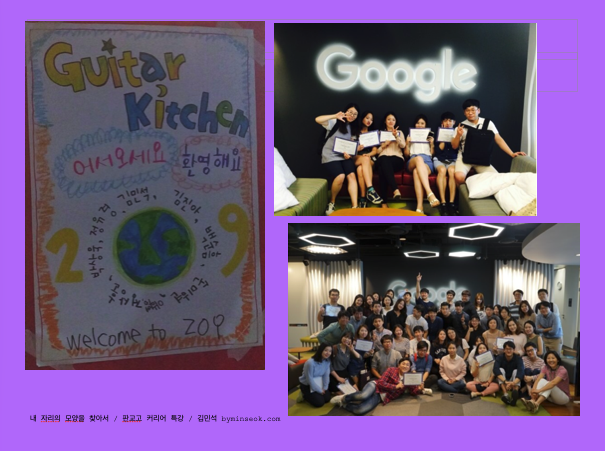
Then I took a digital journalism training program run by Google Korea. Among my cohort were people who got jobs at newspapers like the Hankyoreh, and someone who’s now the CEO of the YouTube channel ‘EO.’ But while taking it, I felt, “Being a journalist isn’t quite what I want to do either.” I wanted to do work that throws big questions at people, but journalism didn’t seem to be it. At 23, I just kept agonizing over my path.
Let’s Do What I Actually Want! Double-Majoring in CS + Philosophy

I was a computer science major, and in my third year I started a double major in philosophy. Here’s what you learn in the first year of engineering school — it’s the same at every engineering school. Mechanical engineering, CS, everyone learns physics, chemistry, and calculus alike. Professors fill the blackboard with calculus equations, you do chemistry experiments and write lab reports. I went into CS because I wanted to build something, but they taught me none of that and had me doing chemistry experiments every day — imagine how boring that was. That’s how I ended up double-majoring in philosophy.
Usually it’s humanities students who double-major in CS to land a job. I was the opposite — a CS student double-majoring in philosophy, which doesn’t pay — so it was unusual enough that I even got interviewed about it. I started a self-organized group, held seminars with students from other schools in a classroom at Sungkonghoe University, and rented spaces to study in. To my CS friends I probably looked like “that odd one,” but I was simply having fun.
My First Internship, Where I Discovered My Own Strengths
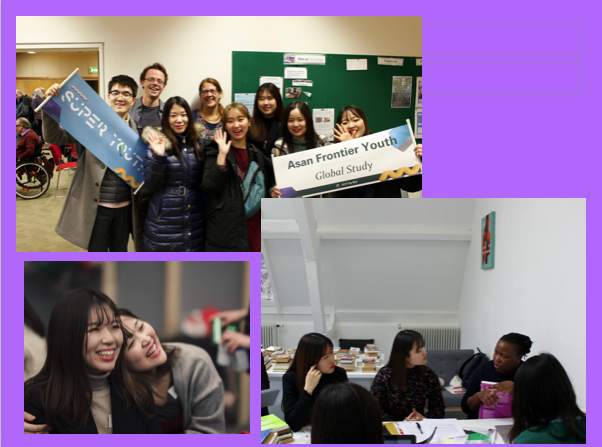
Around 24, I did my first internship — Asan Frontier Youth. It wasn’t just an internship; it was a comprehensive program that sent us on overseas training trips and provided education too. A lot of the disappointment I carried from the village community work healed during this time. A bad experience isn’t always only bad — you learn something from it, and an experience comes along that offsets it. That’s the point I wanted to make by including this.
I had a habit of documenting everything, and when my friends complimented me — “You’re really good at keeping records” — something I had considered a weakness revealed itself as a strength. I went to Hastings in the UK and to the Netherlands, did interviews and had conversations. I didn’t settle on a career path, but I gained a sense of inner strength. “Whatever I do from here, I’ll be able to do it well.”
Having No Plan Is the Plan
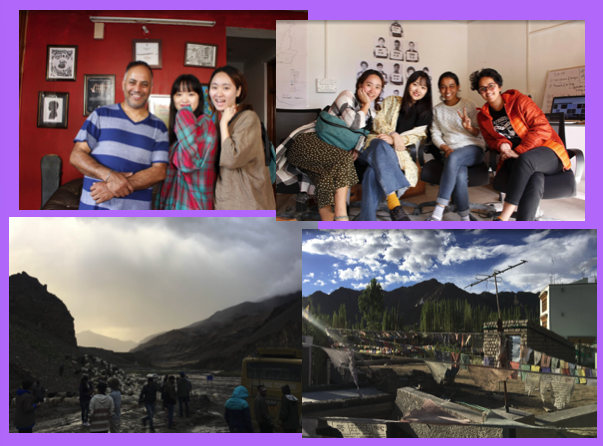
At 25, after the internship ended, I went back to school — and then I got rejected from another internship I’d originally wanted. With nothing at all to do, I looked back and realized I’d been running nonstop since the day I enrolled. I didn’t feel like doing anything, so instead of job hunting, I went traveling in India. For a whole month. I had experiences like a 14-hour bus ride ending with the bus stuck in mud, leaving us stranded among a flock of sheep, and I visited Pangong Tso, the lake from the last scene of “3 Idiots.” I took in gorgeous scenery, read books, and came home — and having spent all my money, thought, “Time to get a job.” So in the fall of my 25th year, I started preparing for employment.
Thinking back over everything I’d done in CS and philosophy, I realized, “I wanted to be someone who makes things.” The reason I went into CS in the first place was to build, but things like the C language they taught at school were rooted in math, which is why they bored me. So I got a job as a service planner.
Five and a Half Years at a Game Company
Three days before my final interview, I came down with type B flu, and the doctor told me not to leave the house for a week. But I had to come all the way to Pangyo for the interview, so the doctor said, “Wear a mask, don’t tell them you have the flu, and only take it off during the interview.” Haha. Thankfully, I got in.
As a new-grad hire, I went through three weeks of training. We visited a Foley studio and watched them record the sword and bow sounds that go into games, did a team exercise designing games in board-game form, and even got training in film production. It was fun.
On my first day, the head of my division sat me down for a one-on-one: “Minseok, you’re a planner, but you need to become a planner who’s better at development than the developers. We hired you because you majored in CS, and the services we build are used by developers, so you have to be good. But there’s no one at this company who can teach you your job, and no one who’s done your job before, so learn it on your own. There are plenty of people who’ll help, so talk to everyone, pick things up yourself, and grow.” He said that to a 26-year-old new hire who hadn’t even graduated yet.
But honestly, that day I found it kind of fun. Rather than “I’m doomed,” I thought about “how do I navigate this situation” — and what I did was simply work hard. Ask lots of questions, dig through documents, record and note everything, keep a diligent work journal. For my first three years, I genuinely spent every day thinking about nothing but work, and enjoying it.
What I worked on at NC was an API gateway. What’s an API? Features like posting on Instagram, leaving comments, sending DMs — inside the computer, those all communicate via ‘APIs.’ You send “I’m going to leave a comment,” and it responds “comment registered” — the smallest unit of functionality. An API gateway is what bundles those APIs so they can be used together. I also built a risk detection system that catches abnormal usage on game community boards, like spam flooding, profanity, and ads.
And it wasn’t only company work — I turned the know-how accumulated in my work journals into articles and contributed them to outside platforms.
To Kakao Impact — Turning a Long-Held Dream into My Job and My Work
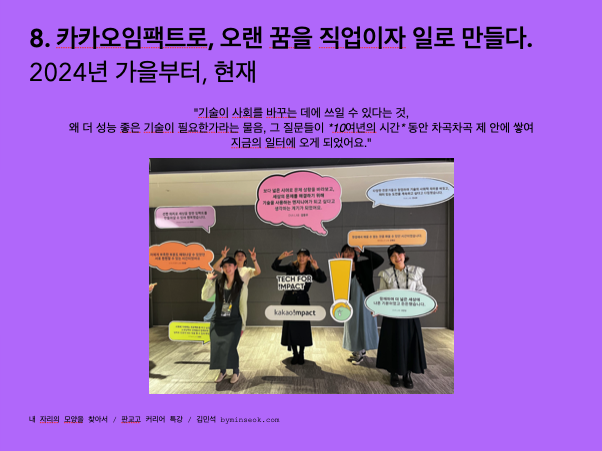
I worked at NC from 2019 to 2024, then moved to Kakao Impact in 2024. The truth is, I enjoyed my work at NC, but my original dream was the one I’d written in the last line of that 2016 interview. “I want to be someone who makes the world better through technology.” The games we made at NC brought people joy, but they weren’t technology that made the world better. I kept living with the thought, “This isn’t my real dream.”
Then I came across Kakao Impact by chance, and the program I now run is ‘Tech for Impact.’ It matches IT developers and designers with people who work for social missions rather than money — nonprofits, social enterprises — and supports them in building services for social impact.
In engineering school, what matters most is efficiency and optimization. How do we engineer things more efficiently, faster, with fewer resources? But for me, the question “Why does it need to be efficient? Why does performance need to be better?” always mattered more. It didn’t always seem to matter from an engineer’s standpoint. But working here, ten years’ worth of accumulated questions seem to have resolved into “why am I building this technology right now, and how does it help society.”
My current role is technology planner. I build systems and run technology programs at Kakao Impact. Not building websites or web services directly, but operating the whole program. It’s called a TPM (Technical Program Management) system — systematizing how we can build these technologies well.
What I’ve been doing lately is AX (AI Transformation). In our organization, I’m the only engineering major — everyone else is from the humanities. Social welfare, psychology, history. I’m leading the effort to help them use AI in their own work to create impact more efficiently. As a nonprofit foundation we’re not a revenue-generating place, but creating more social impact requires efficiency. Recently I even built an AI interviewer myself. Interviewing all the foundation staff alone would take too long, so I made it a service where you talk with an AI and the results get saved and analyzed.
So What Was the Shape of My Place?
https://byminseok.com/lab/constellation/minseok/
I always dreamed of this — that there would be a place made exactly for me. A job, a dream, work — I kept trying all these different things expecting there’d be a place meant for me, and when I finally drew it all out as a picture much later, I realized, “Ah, this was just the constellation of a person named Kim Minseok.”
You may have a career path right now, or a dream — it’s different for everyone — but whatever it is, maybe you just place one dot at a time, and when you look back after ten or twenty years, it becomes each person’s own constellation. That’s the thought I wanted to share.
Worksheet — Drawing My Own Constellation
I brought a worksheet, thinking it might be nice to draw your constellation from where you stand today. Write down the ‘events that could become stars’ from your life so far, plus ‘scenes you want to create in the future,’ then connect them into a drawing. I’ll give you seven minutes.
Tip: If it’s hard to recall your past, try the reverse — think first of a scene or a sentence you want for your future, then work backward to what fits it. For example, if you want to make games or work on humanoid robots, picture that future scene first, then plot the books, trips, conversations, classes, and YouTube videos that relate to it, directly or indirectly, as stars in your constellation.
Student Presentations
- Student A — Elementary 1: scientist / Middle 3: wanted to buy a bass guitar but it was too expensive, so “I want to earn enough money to buy things without a second thought” / High 1: was aiming for dentistry, but after seeing his grades figured medical school wasn’t happening / Future: someone who can invest as much as he wants in whatever he wants, without hesitation. → “Your dream changed quite often, didn’t it. (Laughs)”
- Student B — Elementary 1: moved to a new town and worked hard to make friends / Elementary 6: graduation trip to Busan / Middle 1: moved to Pangyo, friends who reached out to him first / Middle 3: graduation, friends he still sees today / High 1: being the one to reach out first / Future: living on his own, playing games, buying a good computer. → “Earlier it was all about friends and the people around you, but in the future those are gone, replaced by games and a computer. An evolution?”
- Student C — The moment he first resolved to study / Got interested in military hardware he saw on a family trip to Gangwon Province / Got his high school grades and felt “I can do better” / Future: making military equipment.
- Student D — First time abroad in 2015; returning to Korea in 2019 restored his rhythm / First got interested in game design → “the feeling of having found what I truly want to do, the kind of feeling that comes with spending money on it” / When he completes his own fictional universe, the feeling of a simple wish actually becoming real / Future: after military service, bringing to life the world he’s been drawing since childhood.
- Student E — The moment before falling asleep when he figured out the multiplication table (the twos) / Starting middle school / Middle 3 final exams (when he studied hardest) / Future: waking up on a snowy winter holiday and playing games.
Wrapping Up
I never told you how I got into college. I didn’t take the CSAT. I got in through the admissions officer system, back in its very early days. There was no private tutoring for it either. What I did back then is similar to what you all just did — jotting down what experiences I’d had, from elementary school through high school, that related to computer science. I built my personal statement and portfolio from that and got into college. It suddenly came to mind, so I thought I’d mention it.
Thank you all for sharing — take a break and we’ll do Period 2 in a bit.
Period 2 — Let’s Talk AI
How Do You All Use AI?
We’re about to get into AI properly, but first there’s something I’m curious about — how are you using it?
- GPT for over 80% of them, Gemini for about half. Only about one student had tried Claude.
- Performance assessments, homework, research / solving math problems (asking GPT instead of the answer key) / understanding concepts / studying for exams / adding imagination when designing games / random curiosities, like how much building owners earn.
- One student said Gemini is blocked on the school Wi-Fi so GPT is all he can use; another uses Grok; another uses Perplexity (it shows sources, good for settling on a topic).
- For performance assessments, teachers don’t say “Don’t use GPT” but rather “Just don’t copy it outright.” → “But even when we copy, I think the teachers know and pretend not to.” → “Because it smells like AI.” — we had that exchange too.
- Polite speech vs. casual speech with AI: mostly casual. The student who uses polite speech said, “To survive in the world ChatGPT will one day take over.”
Grok was trained on a lot of relatively unfiltered data, so it talks smoothly. But it’s Twitter-based, so if the source is X (Twitter), it could all be lies.
AI ≠ LLM (Sorting Out the Concepts)
We call it ‘AI,’ but strictly speaking, what we’re using right now is a technology called an LLM. Let’s start from the biggest circle.
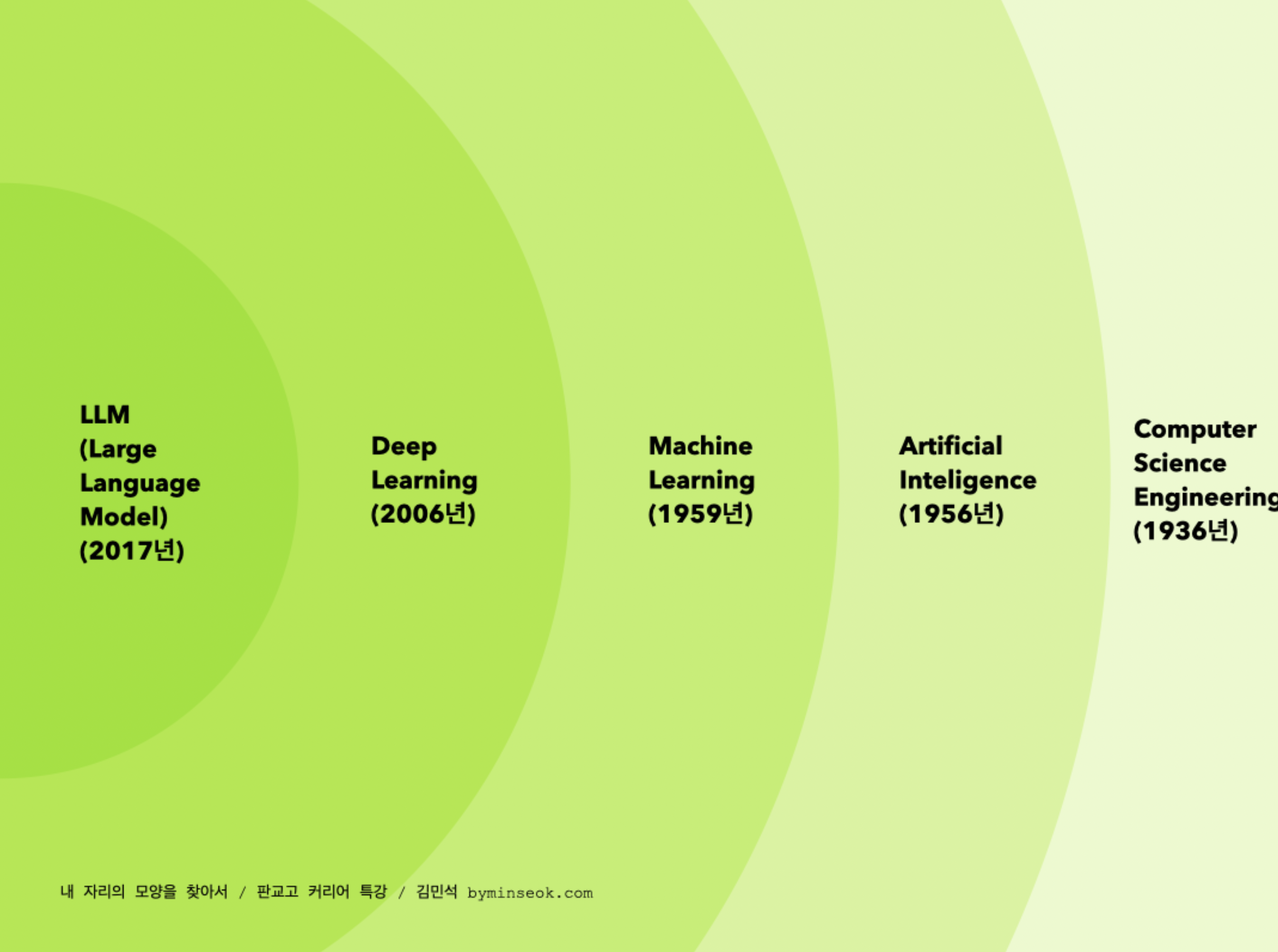
Computer Science / Engineering (1936)
└── Artificial Intelligence (1956, John McCarthy)
    └── Machine Learning (1959, Arthur Samuel)
        └── Deep Learning (2006)
            └── LLM (2017, "Attention Is All You Need")
- Computer Science (1936): Alan Turing laid the academic groundwork with his concept of the Turing machine. Computer = calculator. Courses like algorithms, data structures, operating systems, and networks all belong here.
- AI (1956): A term first coined by John McCarthy. “Making machines reason, learn, perceive, and understand language like humans.” At first it was rule-based. “In this case do this, in that case do that.” When I was in school, the AI course was the least popular one. It was taught by an elderly professor nearing retirement who did nothing but grind through terribly difficult equations. It got canceled for low enrollment all the time. Now it’s probably the most popular course in any CS department.
- Machine Learning (1959): Arthur Samuel. “Machines that learn without being explicitly programmed.” The shift from rule-based systems to statistical pattern learning. But then came a long gap — the so-called AI winter.
- Deep Learning (2006): Learning with artificial neural networks. Even complex data like images and audio could now be learned automatically.
- LLM (2017): The concept of ‘attention’ from the paper “Attention Is All You Need” had an enormous impact on LLM development. Pre-training vast numbers of parameters on text to understand and generate language. The foundation of ChatGPT, Claude, and Gemini.
Computing itself is a discipline only 80 years old. Math goes back thousands of years, physics hundreds, but computer science isn’t even a century old. A field still being built. The point at which you’re starting your careers is the very beginning of a discipline still under construction.
And look at the gaps between those years. 1936 → 1956 → 1959 → 2006 → 2017. It keeps accelerating, and within five years of LLMs appearing, the whole world was using them daily. Not a single one of you doesn’t use them, right?
Three Characteristics of LLMs
① Probability-Based
LLMs don’t actually know truth or facts. They just answer through probability-based pattern matching. What comes after “Today’s weather is ○○○”? The model can’t look out the window, and if no weather API is connected, it just picks the most statistically plausible word from its training data — “sunny” if “sunny” appeared more often, “cloudy” if “cloudy” did.
By analogy, it’s a skilled ghostwriter — one who guesses, “this author would probably write this sentence next.” It’s not understanding and perceiving before it answers; it’s pattern matching, and the data is so vast that it merely looks like truth. It’s really just plausible.
② Hallucination (Why It Happens)
Giving wrong answers with total confidence. It’s not “my GPT got dumber” — that’s just what LLMs are. There are about five reasons.
- The training data itself is wrong — bad information on the internet gets learned as-is.
- It never learned to say “I don’t know” — computers are 0 or 1, right or wrong, one of the two. There’s no in-between. This even appears in a paper OpenAI published in 2025: the training process doesn’t give a good reward for “I don’t know.” Since answering — even wrongly — gets rewarded instead, the model becomes biased toward being confidently wrong.
- It loses the beginning in long contexts — just like we can barely remember what was said at the start of Period 1. Same thing.
- The pressure to generate — once a generative AI starts talking, it can’t stop. It has to finish no matter what. It doesn’t know whether it’s right or wrong, and it can’t say it doesn’t know, so it just goes ahead and gives a wrong answer.
The term ‘hallucination’ itself is contested, too. Hallucinating means “seeing something that isn’t there,” and some critics argue that’s over-anthropomorphizing AI. The linguist Emily Bender proposed the expression ‘stochastic parrot’ instead, saying LLMs don’t hallucinate — they merely string words together probabilistically.
③ Context Window
If you keep talking in one chat window for a week, a month, it gets dumber and dumber. That’s because an LLM has a fixed working-memory size for what it can see at once. It varies by model:
- GPT-3.5: about 4K tokens
- Claude Sonnet/Opus: 200K to 1M tokens
- Gemini: tends to have a large context window, so it degrades less even over long conversations in a single session.
These days there’s talk that making the models themselves smarter has nearly hit its limit — they’ve learned almost all the data humanity has. So companies like OpenAI, Anthropic, and Google are focusing on expanding the context window.
But a big context window alone isn’t automatically good either — the attention computation grows, making it inherently inefficient. So to use it well, keep one topic to one chat, and when it’s done, open a new chat for the next task. That’s how you get better answers.
There’s also a phenomenon called ‘Lost in the Middle’ — with long documents, the model remembers the beginning and the end well, but the middle often blurs. Exactly like us in class. So it’s good to know that you should break work into pieces when you assign it, and that too much information at once confuses the model.
Don’t Mythologize It, Don’t Over-Rely on It
In the end, what I really want to say — more than “here’s how to use ChatGPT well” — is this. Because we call it artificial ‘intelligence,’ we anthropomorphize it as if it’s becoming smart like real human intelligence, but this thing is the product of enormously complex computation. A technology about how to work around the constraints of mathematical operations. Using it well is great, but I hope you don’t mythologize it.
And don’t over-rely on it. Don’t take all your personal worries to AI — talk to your friends too, in parallel. You know how sometimes you only tell the AI because you’re embarrassed to tell a friend, or you think they won’t really listen? I have those moments too, but I make a deliberate effort. If I’ve told the AI something, I tell a person too, to keep things fair. That’s how you avoid getting swallowed by whatever the AI said.
The final decision-maker must always be a human. Organize your own thoughts before using AI, verify the output yourself, and make the decision yourself.
Reading, Writing, Listening, Speaking
People often ask, “What should we do in the age of AI?” The two pillars of human thinking are reading and writing. But you barely read anymore, and since AI writes everything for you, you write even less. Which means you’ve lost the ability to think. Add listening and speaking to that. Are you listening well right now?
It’s similar at companies. We used to write meeting minutes by hand ourselves. Now almost everyone records the meeting and runs AI to write the minutes. It’s convenient, but the downside is that people stop listening to each other. If you don’t listen well, you can’t understand situations or exchange opinions at work either.
Using AI as a tool is fine, but you need to be able to do these four things — reading, writing, listening, speaking — with your own strength to become someone who thinks for themselves.
‘Reading and Writing’ Through Human History
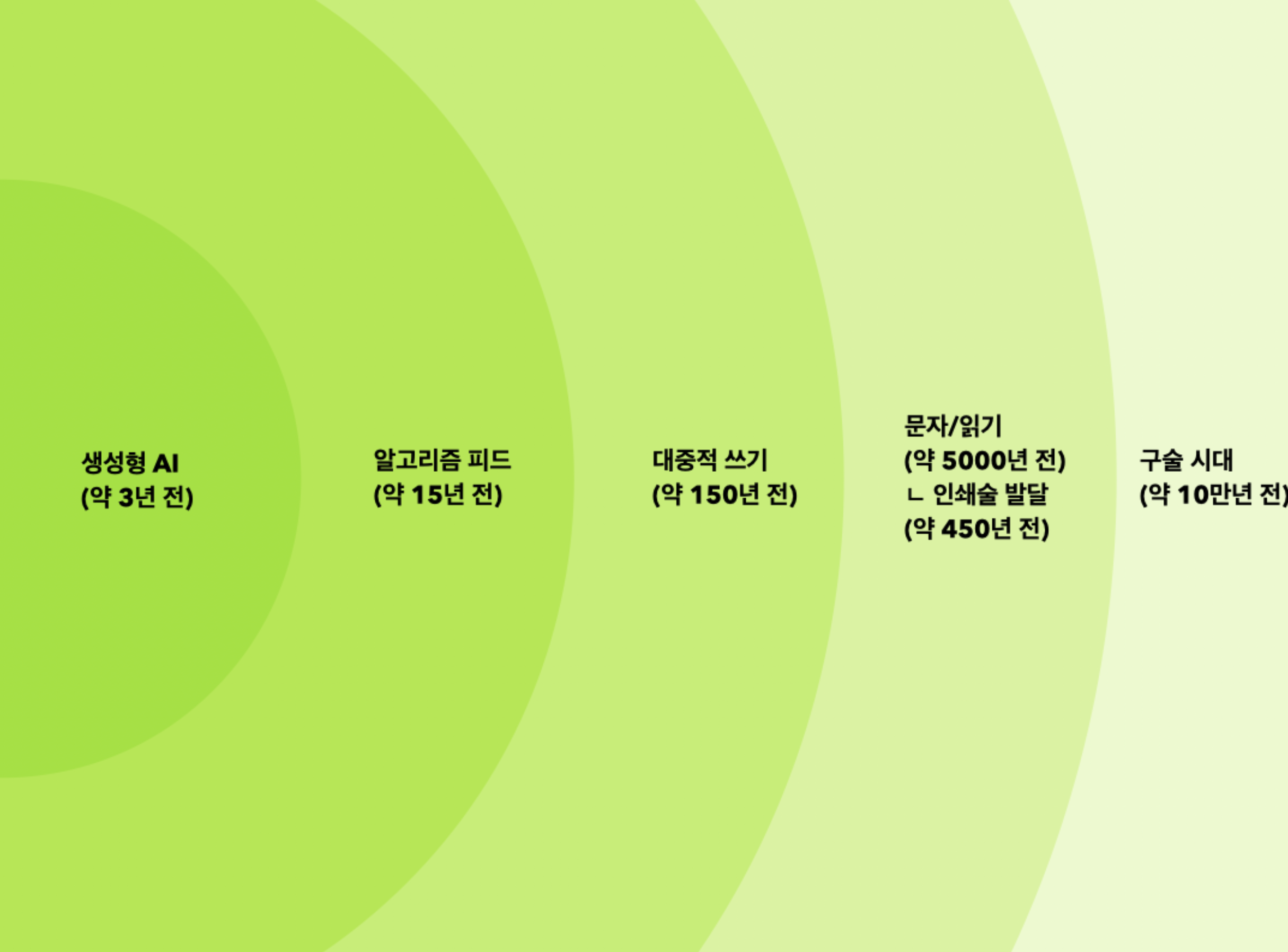
- 100,000 years ago: Records suggest humans communicated orally
- 5,000 years ago: Communication through writing
- 450 years ago: The printing press develops (before that, Europe had a dedicated profession called the ‘scribe,’ and only 1% of the population could read and write. Apparently even the lords who employed scribes couldn’t read or write.)
- 150 years ago: Only about 200 years after printing advanced did literacy finally climb to 70%. Reading and writing became possible for the masses.
- 15 years ago (the rise of the algorithmic feed): I think the point where people started getting dumber wasn’t AI — it was the algorithmic feed. Google, YouTube, Instagram, Facebook. Instead of searching for things ourselves, we started sitting back and consuming whatever the algorithm spoon-fed us, and people stopped reading.
- 3 years ago (generative AI): At the very moment algorithms had already gotten us out of the habit of reading, LLMs arrived, and now we’ve reached the point where we don’t have to write either.
It does worry me a little. Where will a world go when no one can think anymore?
A Screenshot of My YouTube App
I use YouTube like a Google search bar. Normally when you open the app, recommended video thumbnails pop up, right? I hated that so much that I disabled my watch history entirely. So when I open the app, I get a black screen — even the Shorts tab is black. Instead, I subscribe to a lot of channels, and I watch videos and Shorts from the Subscriptions tab.
I’ve also turned off almost all my phone notifications. I don’t even keep the company messenger notifications on — only email. I deliberately screen out the things that would cloud my judgment.
These settings might help with studying too, but grades and studying aside, I believe that to decide for yourself and think as your own agent, you need to deliberately step out of the algorithm’s path.
Book Recommendation — Stand Out of Our Light (James Williams)
He worked at Google for ten years, even winning awards as a top performer, but along the way he began to doubt whether the technology he was building was really technology that made people better, and he quit. He went to Oxford to study the ethics of technology, and is now a technology ethicist.
In the book, he compares social media like Instagram and YouTube to a ‘voodoo doll.’ They collect our information, and inside there’s something like a voodoo doll that resembles us. They keep poking at it — “you’ll probably like this,” “here’s the Instagram of a friend you’re interested in” — to keep us on the platform. We think, “I’m watching this because I want to,” but often it isn’t really our own will.
The analogy that struck me most was Tetris. One reason you lose at Tetris is that the right block never comes down — but it’s also that the blocks fall faster and faster until you can’t control them anymore. He says the world is like that now. Information pours down like blocks, too much and too fast, and if you can’t place it where you want it, you simply lose the game. If information becomes impossible to control, then what do all these pieces of information even mean?
And what he says at the end is this — it took humanity 1.4 million years just to attach a handle to a stone axe. The web is only about ten thousand days old, so there’s hope for us. That’s his message. Like I said earlier, humans started speaking 100,000 years ago and the computer isn’t even 100 years old, so there is hope for us.
Recommended Books
- The Future That Came First — A story about how the Go world changed with AI after the AlphaGo match. On the day of the AlphaGo match, I was a CS student walking into my first-ever philosophy class, and when I heard “Lee Sedol has lost” during the break, the mood in that classroom was devastated. They were all philosophy students. There was fear. The Go world has changed enormously since then — people now learn from AI instead of from other people, and when you watch broadcasts, the AI-recommended moves appear with 80–90% confidence, so even the world’s number one player gets watched with “oh, he’s playing a move that isn’t the AI’s answer.” The point is that the AI-driven change coming for our world has already arrived in the Go world, like a ‘future that came first.’
- AI Feeds on Humans — A bit radical, but it shines a light on the labor hidden behind AI. For Tesla’s self-driving to work well, it has to learn what situations cause accidents, right? So there are workers at companies in third-world countries like Kenya and the Philippines who watch car crash videos every day and label them. Data labeling. Plus stories about how data centers devour enormous amounts of water and electricity, things like that.
Student Q&A
“That car-crash labeling story at the end — isn’t this ultimately developing in a cruel direction?”
It is. From where we sit, AI looks like a machine that talks smoothly and effortlessly, but behind it are those hidden things. That said, I’m not saying let’s not use AI. What matters is knowing how it’s developing and what lies at the bottom of it — so you can use it better. Some people say, “It was trained on copyrighted work without permission, so don’t use it,” but I think you can only use something well when you clearly understand how it works.
A bit more on copyright — Anthropic, the maker of Claude, bought millions of used books, cut them all apart with industrial cutting machines, scanned them, and trained on the data. That’s why Claude is smart and good at coding. ChatGPT was trained on millions of YouTube videos converted into transcripts. Without the creators’ consent. Google knew and didn’t sue — probably because they were doing the exact same thing themselves.
“If information produced by AI gets referenced by other AIs to produce more information, isn’t that a downward leveling of information?”
Absolutely right. The SF writer Ted Chiang once described this as “an increasingly blurry JPEG image.” If a friend sends you an image and you screenshot it and send it on, and someone screenshots that and sends it on again, the quality keeps degrading, right? In exactly the same way, AI-made information gets learned and regenerated over and over, growing blurrier and blurrier. That’s why I asked at the very beginning whether you go to the library. Absorb information in its unblurred state from books, and be able to speak and think with your own strength — that’s how you avoid getting swept up in the downward leveling of information.
“Is using AI tool use, or dependence?”
It can be both. It depends on how you use it. Let me stress it one more time: when it comes to personal emotional matters, always talk to a person as well. That’s the one thing I truly, truly want to leave you with.
“Are programmers no longer needed?”
They’ve become a little less needed, yes. The old level of demand may not be there anymore. But the person who can program best with AI is still, in the end, a programmer. Programmers who deeply understand AI technology will stay in demand — it may even be a more promising field. But the people who were developers and now just sit still without studying will probably get cut. Honestly, I worry that Pangyo might see a lot of unemployment within a few years.
“In computer science, will the ability to use AI become more important than programming ability?”
It depends on what you count as ‘the ability to use AI,’ but I suspect the ability to make judgments grounded in LLM technology will matter more than the ability to simply write logic. Even so, if you’re going to be an engineer, knowing the foundational discipline of CS — data structures, algorithms, operating systems — will matter even more. Solid fundamentals are what make application possible.
To the students interested in mechanical engineering and humanoid robots —
LLMs won’t stay confined to computer science — they’ll connect into every field. Deep learning and machine learning used to be one subfield of CS, but LLMs are now crossing the boundaries between fields. Even if you go into mechanical engineering, knowing the characteristics of LLMs well will give you many more ways to connect and apply them. We’re now entering the era of robotics and humanoid robots, and rather than programmers building software the old way, more and more of it will be fused with physical AI. If mechanical engineers used to build factory machines, I suspect you’ll increasingly be building physical things combined with AI technology.
What about semiconductors?
Semiconductors aren’t a field I know deeply, but that industry has always had its cycles. Right now it’s in a tremendous boom cycle. Korea’s economy ranks around 8th to 10th globally, but our stock market is less than 5% of the global market. This year, with the new administration coming in and pushing for things like MSCI index inclusion to revive the stock market, plus the semiconductor boom on top of it, Samsung Electronics and SK Hynix shares have risen a lot. Whether semiconductors will stay important going forward is hard to answer definitively, but given the nature of the semiconductor industry, a down cycle will certainly come at some point.
What about AI in the game industry?
It’s being used heavily. Sadly, the domestic game industry — and I say this as someone from the game industry myself — is in pretty hopeless shape. But it might recover by the time you’re job hunting, and it doesn’t have to be domestic anyway, right? You can go abroad; there are plenty of better places. AI is being used extensively throughout the game production pipeline.
Wrapping Up
That’s all from me. Feel free to ask questions during the break, and thank you for listening so well today.