Contradictory AI — An In-House AI Training at Minumsa
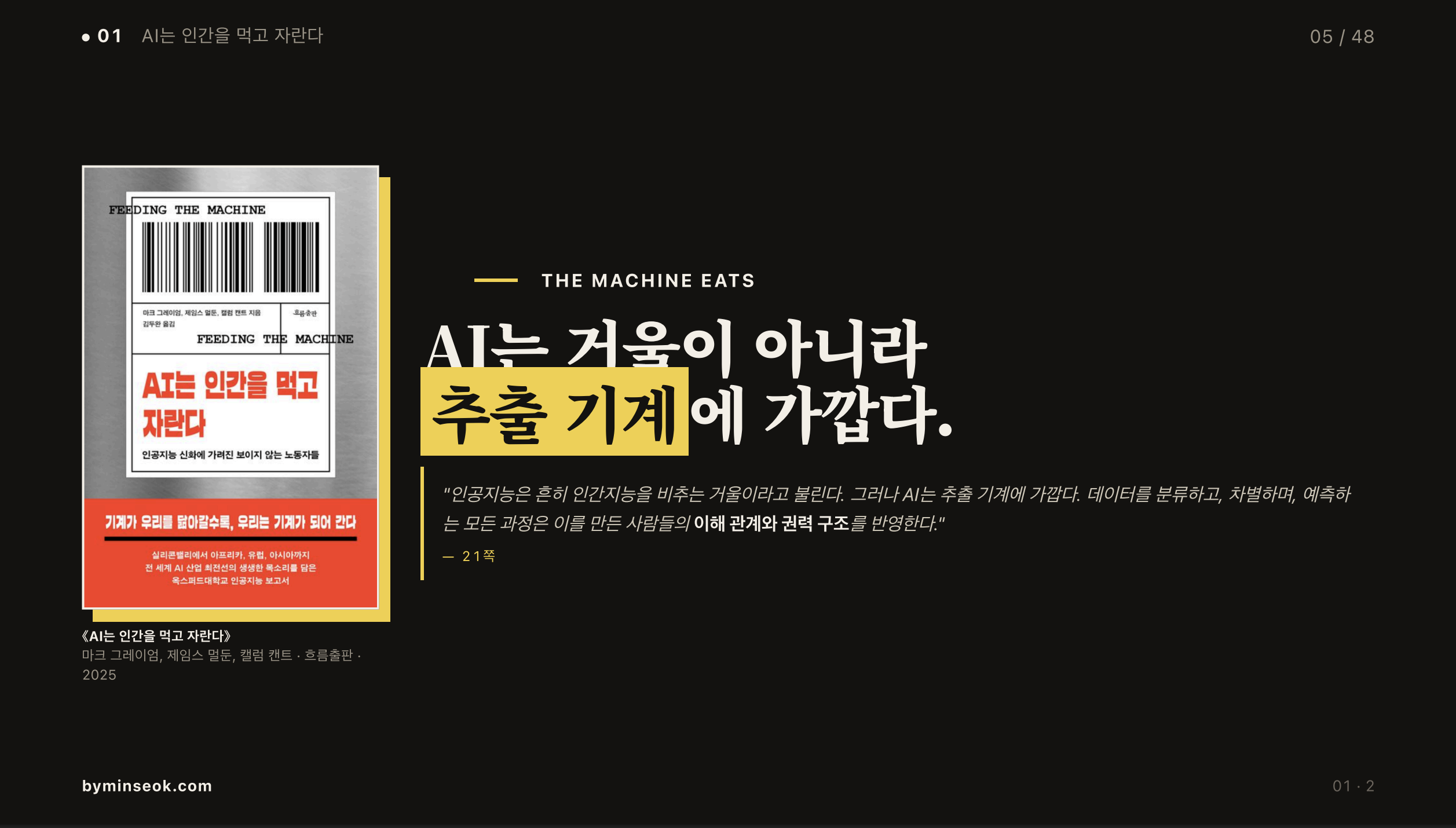
When I was invited to teach a session on using AI at Minumsa, I didn’t want to give the usual practical how-to talk. Part of why Anthropic’s Claude got so good is that an enormous number of books were cut apart and fed into its training, and it felt a little off to stand in front of the people who make those books and say nothing but “AI is great, go try it!” I wanted to open the session by naming the ethical problems this technology carries. And then, to prepare those very slides, I found myself once again talking to Anthropic’s Claude. I was standing inside a contradiction, and I had known it for quite some time. While preparing the lecture that day, I asked the AI why we should still learn and use this technology despite its problems — the labor of data labeling, the electricity that data centers devour, works taken from creators without consent — and there I was, putting that question to an AI, of all things. One of the answers stopped me. For a critique of technology to be most persuasive, it should come from someone who knows the technology deeply. Someone who knows how to use AI and still speaks of its shadows can cut far deeper than someone who calls AI bad without ever having tried it. Walt Whitman wrote it 160 years ago. “Do I contradict myself? Very well then I contradict myself, (I am large, I contain multitudes.)” Finding that line in the morning felt like a sign that the day ahead would be a very good one.
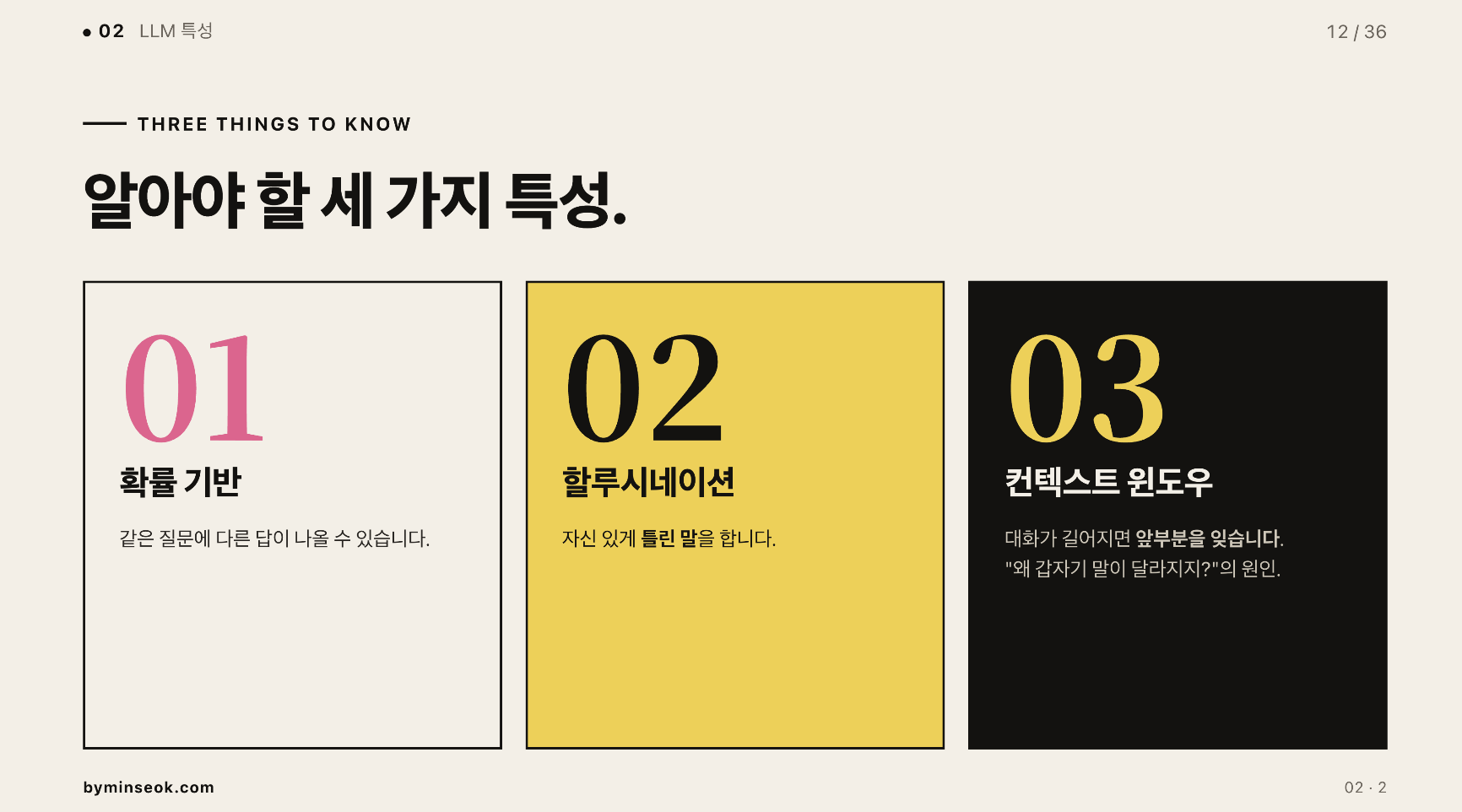
In the lecture hall, I began by saying that AI is like an onion. Artificial intelligence, machine learning, deep learning, large language models. Peel away four layers of skin and you find the ChatGPT and Claude we talk to every day. But to explain the essence of what this machine does, you first have to admit one thing. There is no concept of “truth” inside it. All it has is “plausibility.” Faced with the blank in “The weather today is ___,” it lines up “sunny” at 38%, “cold” at 22%, “cloudy” at 17%, picks the most plausible word, and stitches it on. It’s closer to a seasoned ghostwriter guessing, “this author would probably write this sentence next.” Not understanding, but pattern matching. I could see the expressions in the room subtly shift. (“Wait, this doesn’t seem like just another AI lecture?” …though of course, maybe it was.)
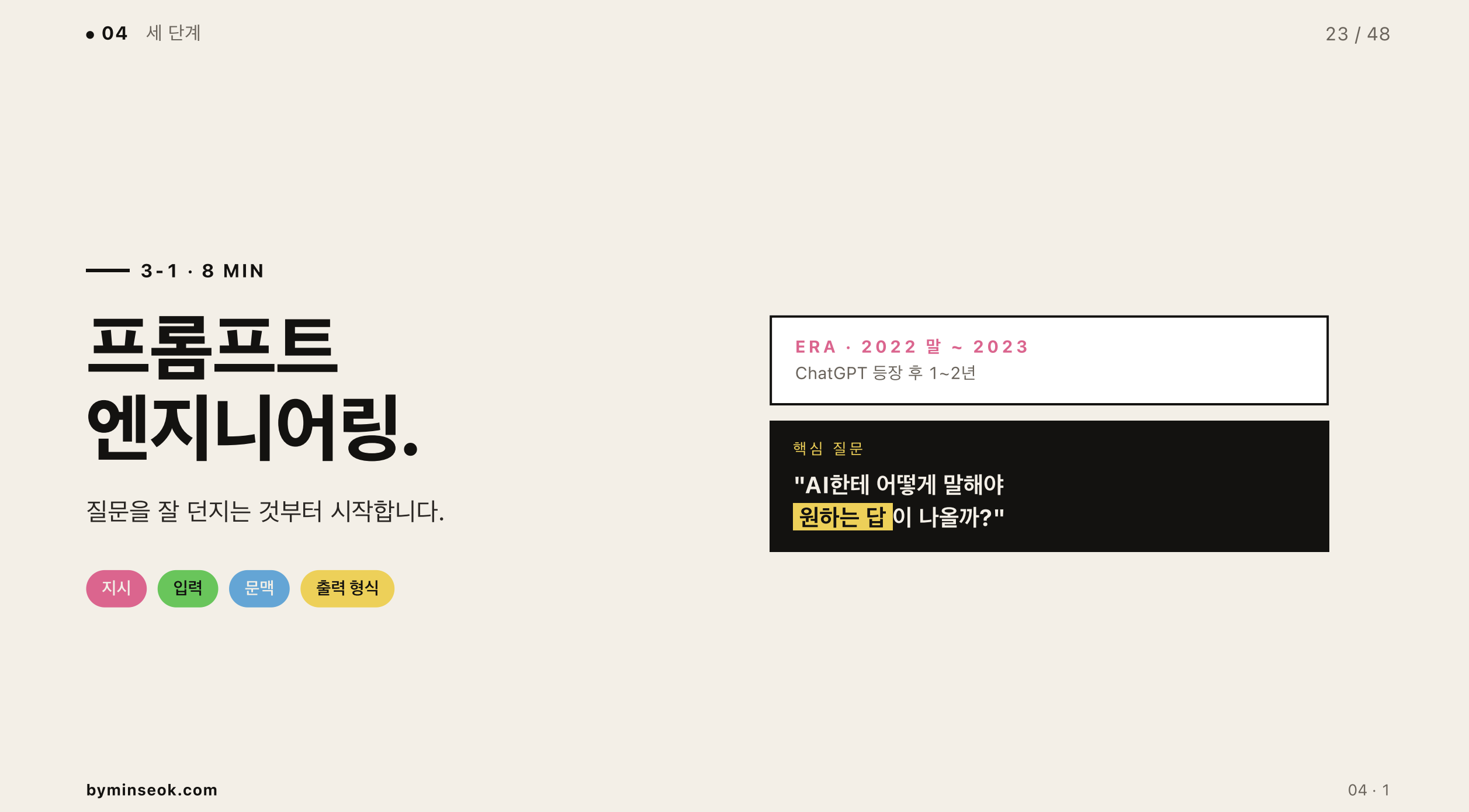
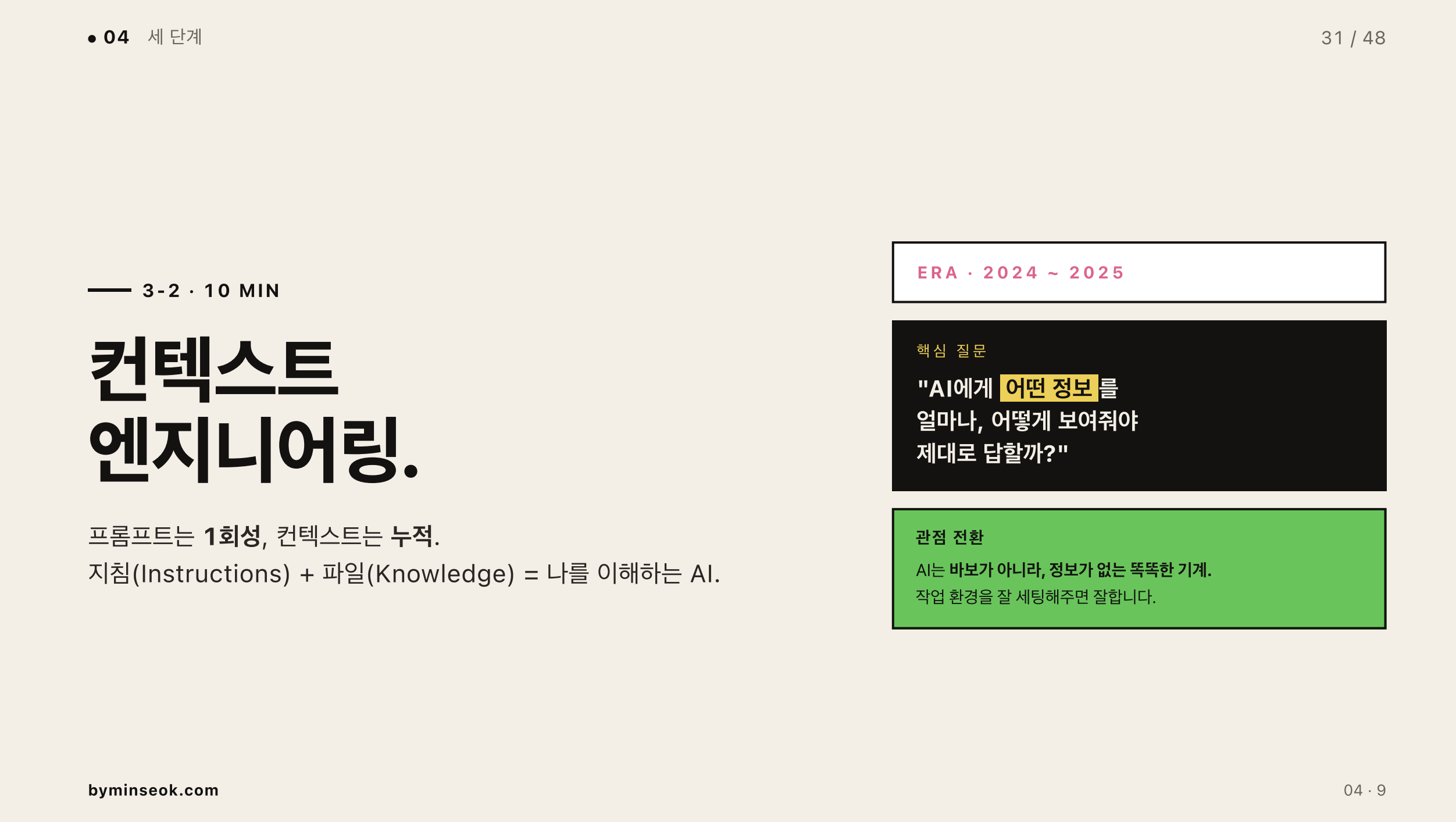
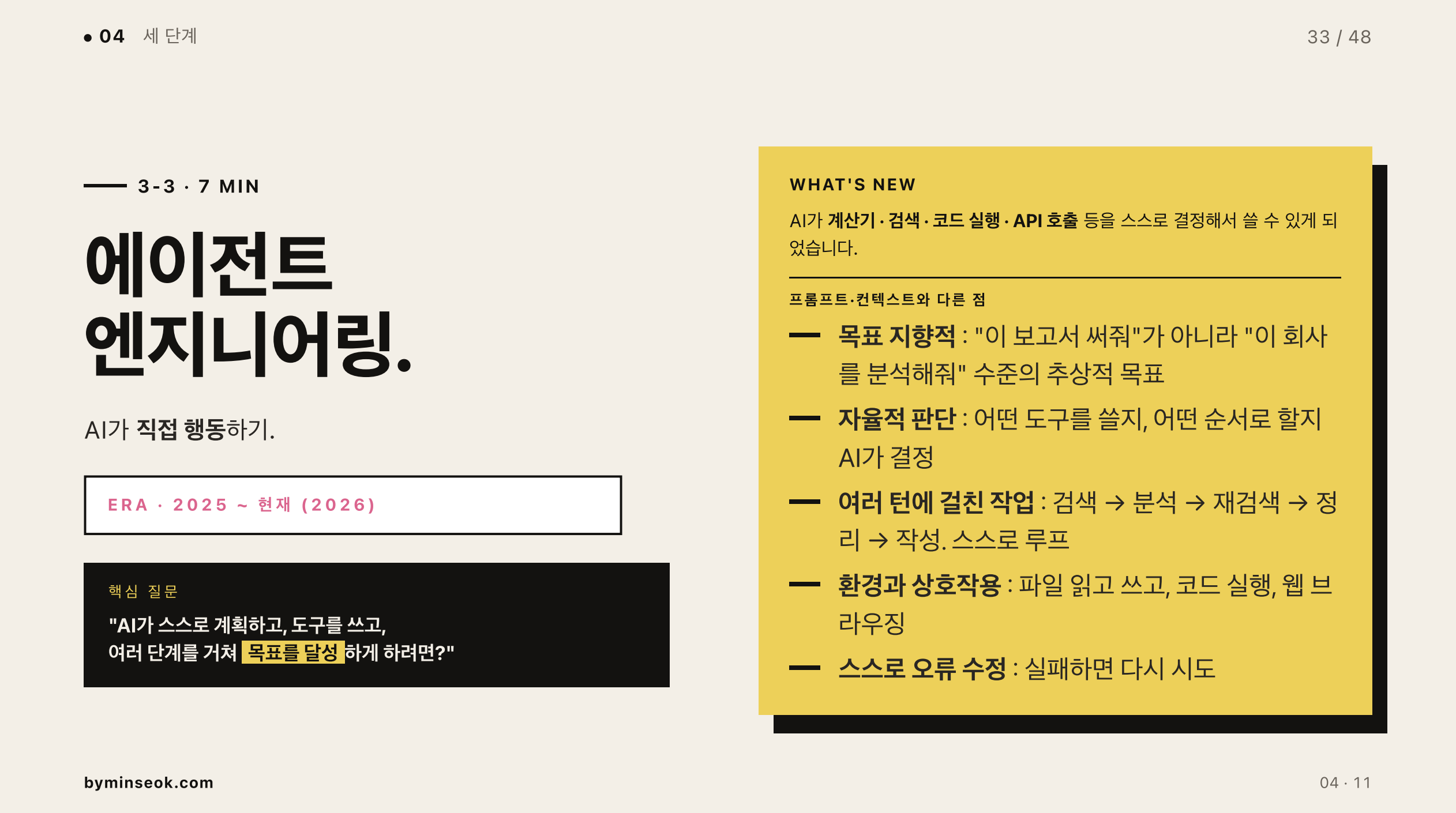
Next I talked about prompt engineering. The difference between “Write a press release” and “Write a press release for the novel OO, published by Minumsa, one A4 page long, in formal register, opening with a quotation.” Assigning a role, showing examples, breaking the task into steps. But even as I said all this, I wanted to say that we have already entered an era where this alone is not enough. From prompt engineering to context engineering, and on to agent engineering. What’s truly interesting in this arc is not the advance of the technology but the migration of control. In the prompt era, humans controlled every single word. In the context era, they designed the information environment. In the agent era, they hand over only the goal and delegate the execution. The very definition of “using AI well” is changing. From knowing how to phrase things, to knowing how to design information, to knowing how to delegate and supervise. That is work that comes remarkably close to management.
But take one more step and an uncomfortable question is waiting. The more autonomy we give AI, where does responsibility go? In a world where an agent decides on its own to search, write code, create files, and try again when it gets things wrong, who is responsible for the result? One participant raised the question too. “So humans really don’t need to make the judgment calls anymore?” I answered that it isn’t technically impossible. But I believed that what will matter more and more is the human capacity for judgment. Because catching that hair’s-breadth difference is work that humans have to do.
After the session, I was glad to see the participants visibly satisfied. Rather than a vague fear of AI or a sense of being overwhelmed, I hoped they could come away thinking, “this is just a machine after all!” And it felt good that some of what I had prepared — hoping that the people most devoted to their craft would come to master this technology faster than anyone — seemed to have gotten through, even a little.
I use AI while knowing its ethical problems, I prepare lectures with AI while teaching its limits, and I write critiques of AI together with AI. What matters to me is engagement grounded in critical thinking, not vague fear. If the technology keeps advancing and human judgment matters, then that judgment requires knowing this technology. There is no choice but to carry the contradiction. To acknowledge it, as Whitman did, and to extend a hand from within it. Whitman’s poem doesn’t end with “I contradict myself.” It goes on. “Who wishes to walk with me? Will you speak before I am gone? Will you prove already too late?” A person who has acknowledged their contradiction is not isolated. Only then does a real invitation become possible.