"What on Earth Have You Done to This Girl?" - After Seeing 'Simcheong' by the National Changgeuk Company
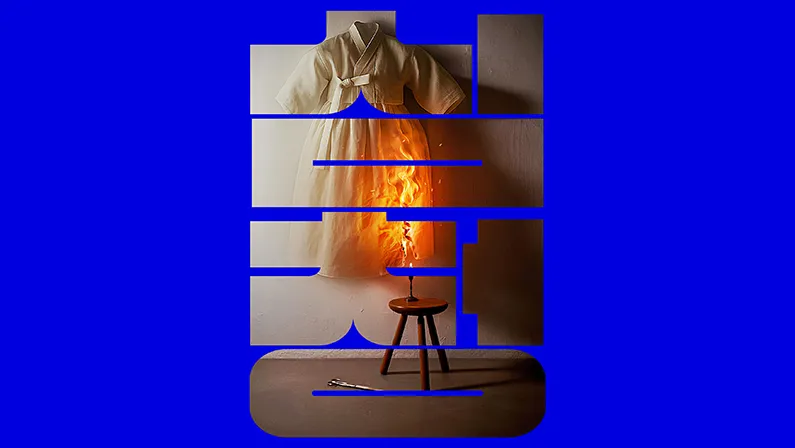
What on earth did you do to this girl?
After seeing the National Changgeuk Company of Korea's ⟨Simcheong⟩ by Yona Kim
> What on earth did you do to this girl?
That question kept circling in my mind. Even after the performance ended and the curtain call began, my tears wouldn't stop. I sat there crying until the audience had left the theater. If my friend hadn't been there, I don't know how I could have left that theater.
While the exact year of the original Simcheong story is unknown, records show that the 「Simcheongjeon」 was already completed and circulated by the 18th century. So now it's the 21st century… For three centuries, you people. What on earth have you done to this girl? Honestly, for 300 years, she was sacrificed in the story, forced into love, forced into filial piety, and ultimately forced to death. The thought that this was a conversation that should have happened long ago made my tears flow uncontrollably.
A Journey Following Small Cracks
I started watching pansori two years ago. I became interested in a singer I discovered by chance on a crossover group audition program, which led me to see a performance by the 'National Changgeuk Company' where that singer belonged. When I first saw the National Changgeuk Company's ⟨The Merchant of Venice⟩, I felt anew that traditional Korean music could be anything but boring, and that pansori was incredibly cathartic and soul-cleansing music! It felt like a whole new world.
Among the many pansori performances I saw afterward, the most memorable and beloved passage was 'The Scene Where Sim Bong-sa Opens His Eyes'. At an outdoor performance, singer Lee Ja-ram performed 'The Scene Where Sim Bong-sa Opens His Eyes'. In that moment, the venue transformed into the royal feast scene, and singer Lee Ja-ram, playing the blind man, opened his eyes. The feeling was an uncanny experience that could only be described as 'a heart-piercing experience'.
After that, while watching performances, I began to notice small cracks appearing in the young singers. It was during a performance by singer Kim Su-in at the Daejeon Municipal Yeonjeong Korean Traditional Music Center that I first started thinking about the idea of subverting the classics. The young singer performing Chunhyangga, just before the final scene where Lee Mong-ryong returns and tests Seong Chun-hyang one last time, said, "Lee Mong-ryong seems like a madman. Why can't he just hold her? Why is he acting like this? I don't get it."
Exactly. Until then, I'd just thought, "Well, that's just tradition. It's old-fashioned, that's all." Hearing that made me see it in a new light. While you can't change the story in traditional pansori, I realized there could be singers who perform with that kind of feeling.
In the ⟨Jeolchang 4⟩ stage created by singers Jo Yu-ah and Kim Su-in, there are also several scenes playfully subverting the classic. The song about the palace maid, bordering on sexual harassment, is sung by swapping the male and female singers. When Lee Mong-ryong returns, Seong Chun-hyang shouts, 'Why didn't you come when I was dying!' and throws the ring at him. I thought that alone was quite delightful and cathartic, and I admired the young singers' wit. Yet, Yona Kim's production of ⟨Simcheong⟩ seemed to suggest that wasn't enough.
The Moment the Water Balloon Burst
What the young singers today say – "Isn't this kinda lame?" "Isn't it frustrating?" – felt like them saying, "Yeah. Actually, that's really strange. Let's talk about it this way.' It felt like they were overturning the entire existing table, throwing it away, and tearing it to shreds.
But this wasn't the destruction of tradition. The value of tradition doesn't come from the accumulation of time, but from the wisdom and meaning it contains. And that wisdom and meaning must continue to be questioned and reinterpreted. In the 18th century, the very concept of a woman's right to self-determination didn't exist, so they had no choice but to elevate Shim Cheong's sacrifice into something beautiful, creating something like a dragon palace romance.
But now, we can ask different questions. "Was her sacrifice truly voluntary?" "What kind of society demands such sacrifice from a young woman?" This isn't because people today are smarter than those in the past, but because we've gained different perspectives and values.
Lee So-yeon, the singer who portrayed Byeongdeok in ⟨Simcheong⟩, stated in an interview: "Couldn't it be that 'Simcheong' has endured precisely because it's an improbable tale? While it was carefully passed down before, like a water balloon filled with something precious kept from bursting, this time we've burst it wide open. It's the real, honest story, unadorned."
I witnessed that moment the balloon burst from the audience.
The Deconstructed Myth, The Revealed Truth
The work was composed of several acts, each bearing an English title. The part where the filial daughter was called a 'dutiful daughter', and most shockingly, the act where Sim Bong-sa opens his eyes was titled 'The Confession by Accident'.
The three sons of Jang Seung-sang wrote on the floor: 'LESSON OF LOVE', 'SHE GOT LOVE'. And 'LOVE' and 'VICTIM'. Simcheong, forced into the duty of filial piety in the name of love and made a victim. She thought she had gained love, but in truth, she hadn't. Wasn't that what she finally realized after being thrown into the Indangsu?
Kim Woo-jeong, the singer who played Simcheong, confessed in another interview: "I actually found it refreshing because it was my first chance to express myself so freely on a traditional stage. Among the five major traditional operas, I never really liked Simcheongga. Reciting the verses, I couldn't empathize at all—it just annoyed me. Shimcheong, always good and sacrificing, was so boring and stifling!"
Kim Yul-hee, another singer who played Shimcheong, elaborated further: "People feel an immense variety of emotions every moment, but the Shimcheong in the pansori Shimcheongga only ever sacrifices. Waking up to the same painful reality every day must be agonizing. Did she really just voluntarily jump into the water? That lingering question seems somewhat resolved in this production."
This stage was a world deconstructed and recreated from the existing 'Simcheongga'. Though it used familiar passages directly from the traditional Gangsanje and Dongchoje pansori styles, they were arranged completely differently to create a new 'Simcheong'. There is no Dragon King. There is no Queen Sim. Only Sim Cheong, clad in that red hanbok as she plunges into the Indangsu, her face smeared with blood, her body wounded, simply trudges out of this space.
Sim Cheong sits at the edge of the stage, smoking a cigarette. While the scene of the blind feast unfolds, she turns her back on everything happening behind her and gazes at the audience. Her smoking while observing the "belated regrets" unfolding behind her was her viewing all those who had sacrificed her as a completely detached observer. As if she were no longer their sacrificial lamb, no longer their symbol.
Then Simcheong descends among the audience, opens the door, and exits. This was not merely leaving the theater. It was breaking free from the narrative structure that had imprisoned her for 300 years. She declared she refused to remain trapped within that story any longer.
On stage, the play ends as an image is projected of Simcheong passing through the Haeoreum Theater lobby, descending the stairs, crossing the first-floor lobby, opening the main door, and walking out into the plaza. In this scene where fiction bleeds into reality, all boundaries collapse. The traditional Shimcheong becomes a queen in the Dragon Palace, restores her father's sight, and the story ends. But Yona Kim's Shimcheong rejects such illusions. "I'm leaving. I'm done with this story."
It was the moment Shimcheong finally gained her agency. She finally walked out of her own story on her own two feet. Could there be a more beautiful liberation? That's why my tears wouldn't stop until the very end.
The Story That Should Have Been Told Long Ago
From the moment of the accidental confession, my tears wouldn't stop. It felt like a clash of emotions—tears of shock from the contrast with scenes seen in traditional Korean music, empathy and pity for the sacrificed girl—all mixed together, overwhelming my control.
Shim Hak-gyu opens his eyes, and Shim Cheong plunges back into the Indangsu. They tell Shim Hak-gyu to look directly at that scene, but Shim Hak-gyu, having opened his eyes, closes them again and shields his face. The people of Dohwadong were those who opened their eyes yet remained blind; they wandered the stage horribly, like corpses with open eyes.
The comical scene where all the other blind people at the feast open their eyes together is absent from ⟨Simcheong⟩. Though the narrative remains unchanged, the feeling is entirely different. Simcheong sits at the edge of the stage smoking a cigarette, and as the familiar story of the blind regaining sight is sung, the characters suffer. Do they finally understand? After three centuries, what we did to Simcheong.
All those people on stage seemed to feel this newly realized anguish, and that anguish was transmitted to the audience. That's why my tears wouldn't stop, and why someone, repulsed by it, poured such scathing criticism on this work.
The two singers playing Shimcheong cited the scene where "Shimcheong watches the people belatedly regretting their actions before her irreversible death" as the most heart-wrenching moment in an interview. "A figure, whether Simcheong or myself, perches at the front edge of the stage facing the audience, cigarette in mouth, watching the people behind her filled with belated regret. We live our lives constantly regretting, don't we? We tell ourselves not to, yet repeat the same mistakes."
All those questions came crashing in at once like waves on the screen, and I, sitting in the audience, felt as if I were drowning.
What on earth did you do to this girl? And why did you stand by? Why didn't you say anything? Did you close your eyes even while they were open?
But to me—who had only seen pansori and traditional Korean music for a mere two years—yet had watched the small cracks young singers had thrown out during that time—it felt like an incredibly cathartic and shocking work. And fundamental questions about our collective narrative, about the stories we've deemed beautiful, floated around. Why have we wrapped the suffering a girl endured in a story passed down for 300 years in beautiful sacrifice? Why didn't we question it?
Only now have we opened our eyes. We've finally told the story we should have told long ago. That's why it was a work that felt all the more painful.