National Changgeuk Company 'Lee Nal-chi Jeon' World Premiere
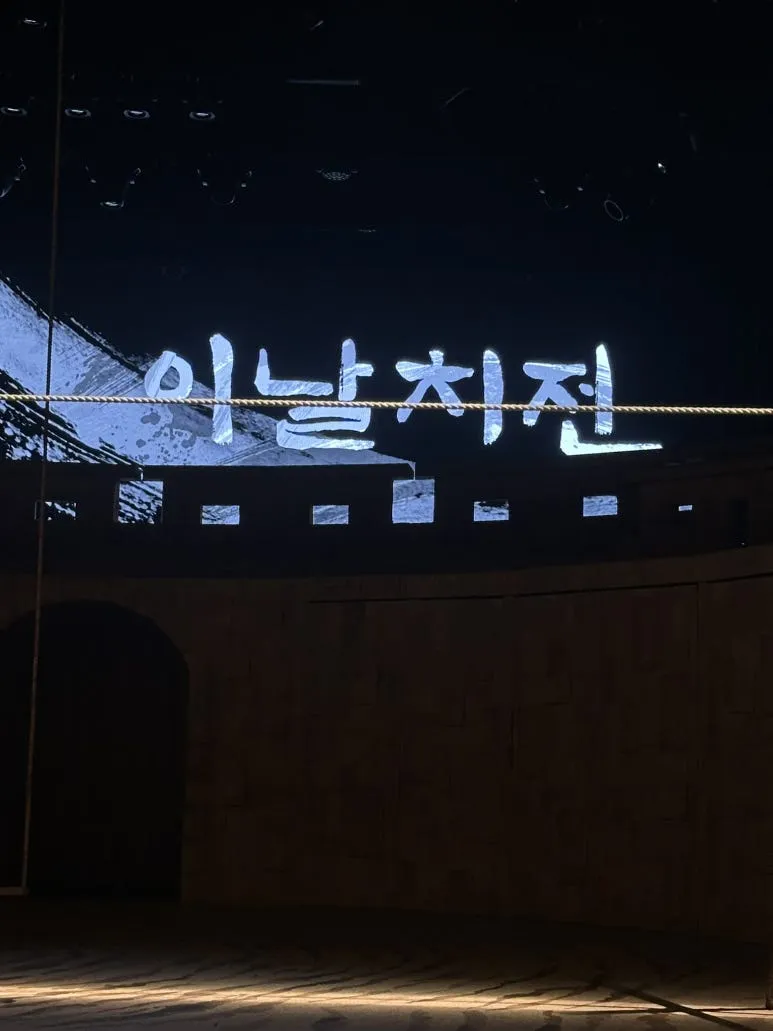
The National Changgeuk Company's "The Tale of Nalchi" tells the story of a man born as a servant in a noble household who became Joseon's greatest singer. While the subject matter—the life of the historical figure Ilchwi—could have been heavy, the production delivered a refreshing charm by presenting it in a cheerful and bright tone, true to the spirit of 'Ilchwi'.
At the heart of the play lies Ilchwi's growth. Starting as a tightrope-walking clown and rising to become the greatest singer, each person he encounters offers him a different insight. During his rope-walker days, Ilchil displayed extraordinary ambition, declaring, "When you're on the rope, you can see the whole world below." His first turning point came when he was moved by the singing of the great master Song Heung-rok. He received the teaching from Heungseon Daewongun that "You must do what others cannot to surpass them," and putting this into practice, he seized the opportunity when Park Man-soon's position as a master drummer became vacant and became his disciple. His sincerity shines through as he learns the art of singing, step by step, enduring scoldings and having his feet washed.
The true transformation of Inalchi begins with his performance of the Chunhyangga in front of the wealthy lady. He realizes his voice can move others. Later, he learns the importance of emotion in singing from Jeong Chunpung, whom he meets during solitary practice in the mountains, and from Park Yujeon, he learns how to maximize that emotion. The scene where he sings for the old mother in Seochon shows the moment Ilchil comes to understand the essence of sound.
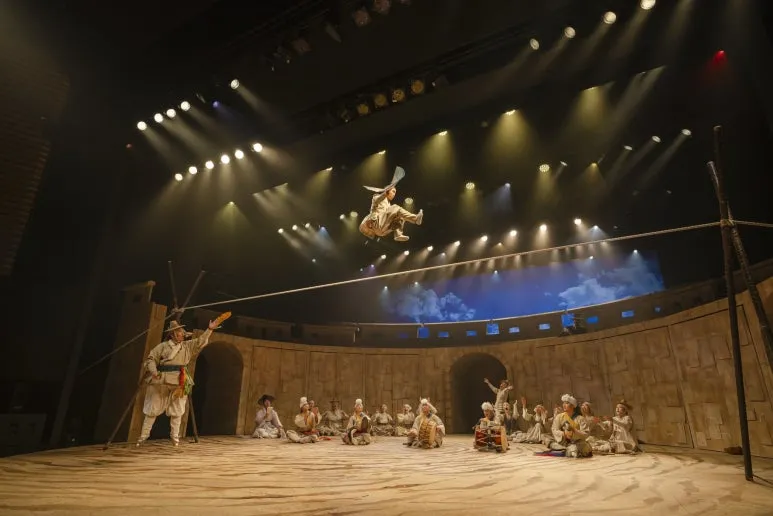
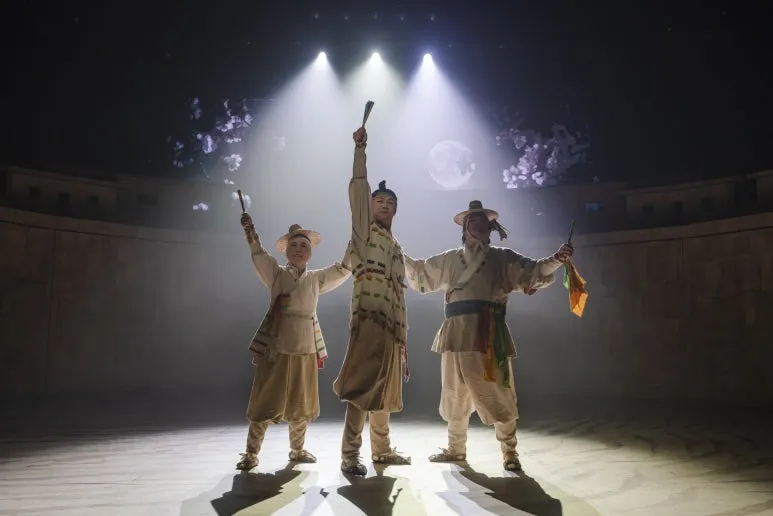
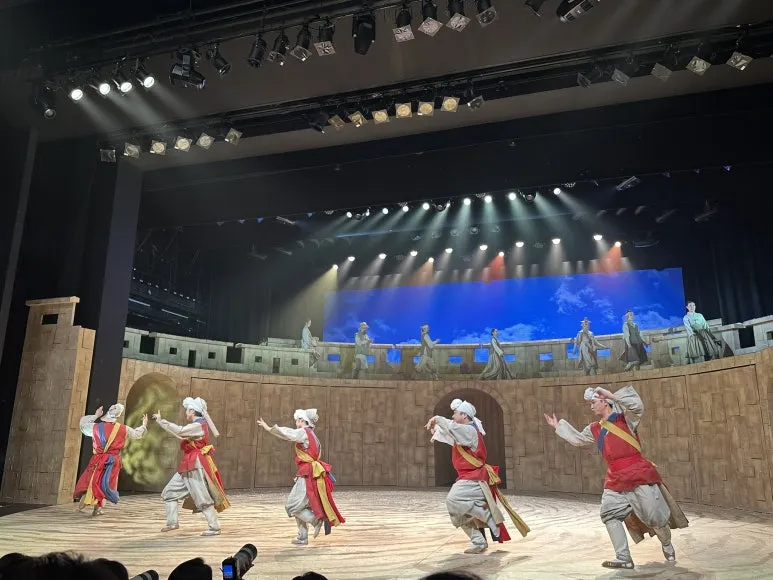
Alongside this narrative of Inalchi, the performance offers diverse delights. Its composition, like a comprehensive gift set of traditional performing arts—featuring tightrope walking, courtyard games, lion mask dance, and folk percussion—captivates the eye. The comedic performances by actors Park Sung-woo (as Park Man-soon), Choi Yong-seok (as Gaedari), and Seo Jeong-geum (as the Clown) add laughter to a play that could otherwise feel heavy. Even during serious vocal passages, the audience chuckled at the actors' spontaneous ad-libs.
Kim Su-in's performance as Nalchi adds depth to the play. His voice, traversing the Chunhyangga, Simcheongga, Jukbyeokka, and Sugungga, heightens the work's persuasiveness. In the scene where Nalchi first properly displays his singing before the wealthy lady, showcasing the Chunhyangga, Kim Su-in, whose specialty is the Chunhyangga, truly shone. Just as the wealthy lady was captivated by his voice, the audience in the seats couldn't help but be drawn into Ilchil's charm in that moment.
His chemistry with the clown and Gaedari was also outstanding. The trio's chemistry, reminiscent of Simba and Pumbaa from The Lion King, added warm humor to the play. The 'Indangsu passage' from Simcheongga, sung with life-or-death intensity, was particularly memorable. Gaedari beating the drum while shedding tears, the clown kneeling on one side, enthusiastically adding interjections and cheering, and Inalchi singing with all his might right in the middle. After the song ended and he received recognition from Lee Choe-eung, the laughter shared with his friends as his legs gave way from relief and accomplishment encapsulated Inalchi's journey. Singer Kim Su-in's acting skills showed a new level of maturity. It was astonishing to see his capability, taking on the main protagonist role in his fifth year with the troupe and leading such a large-scale changgeuk.
Alongside this individual passion, 《The Legend of Ilch'i》 fully showcases the unique charm inherent to the changgeuk genre. Unlike traditional pansori, a solo comprehensive art form, changgeuk features multiple singers performing distinct roles. This production holds deeper significance as it is a creative work reconstructing fragmentary records of the real-life master singer Ilch'i (real name Lee Gyeong-suk).
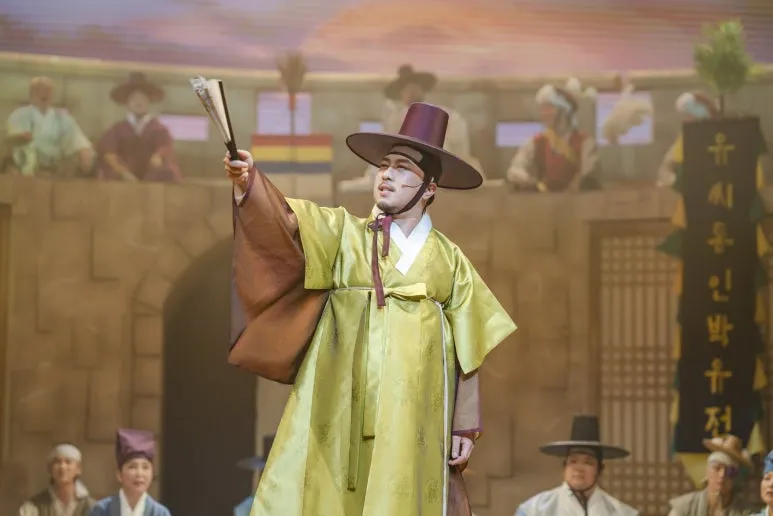
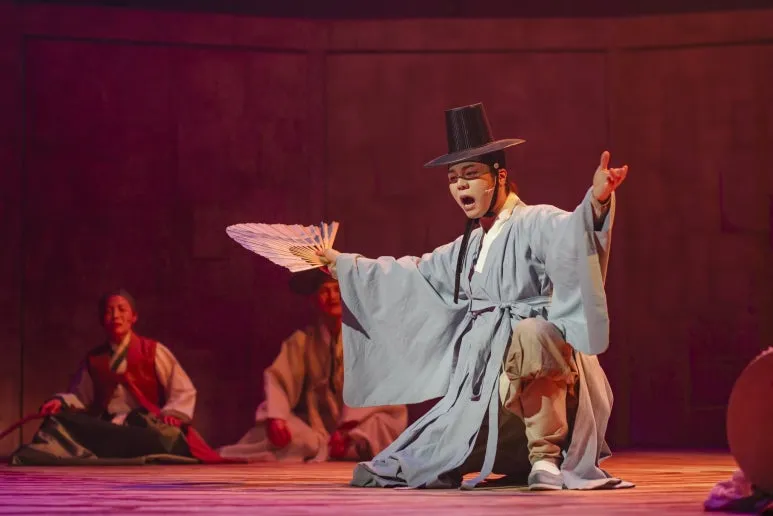
It is also captivating to encounter various iconic passages of traditional pansori within a single changgeuk. Park Yu-jeon and Inalchi's distinct renditions of 'Sim Bong-sa's Eyes Opening' delicately reveal each singer's unique character. Park Man-soon and Inalchi's 'The Battle of Red Cliffs' transforms the confrontation between two archrivals into a breathtaking duet that leaves the audience breathless. Another unique strength of this work is the opportunity to experience the 'dureum' (passages newly composed or refined by master singers with their own unique singing styles and personalities) of several renowned singers from the late Joseon period all in one place. Combined with large-scale group dances performed by the youth education troupe members and a sensational stage design, this creates a spectacular production that fully showcases the scale of the National Theater's Daloreum stage.
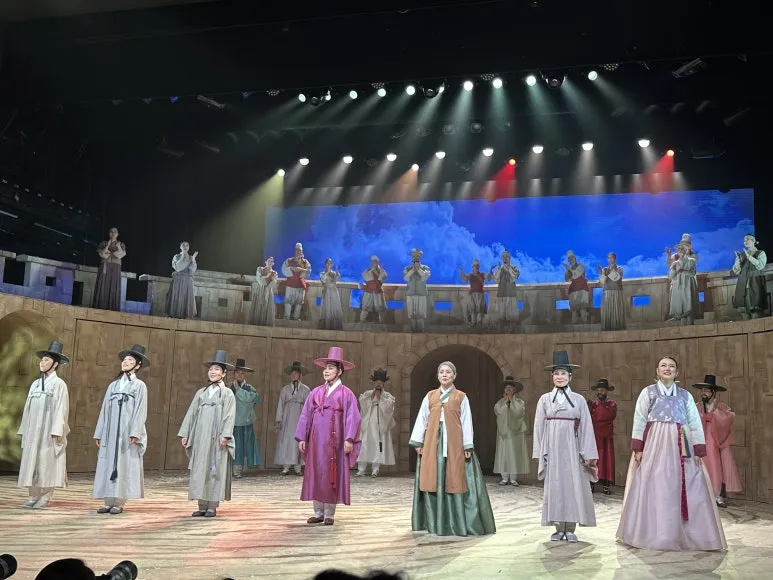
Towards the end of the play, Ilchil ascends to the highest position as a court jester, yet returns to the common people. This transcends mere social advancement or romantic fulfillment, signifying the completion of a journey to discover his true self as a jester. The ending, culminating in spirited dance movements, and the joyful energy radiated by the actors during the curtain call, deepened the lingering resonance of the performance.
(Photo credit: National Theater SNS, the artist)