Seo Jin-young - Dear Local, Where Do You Live?
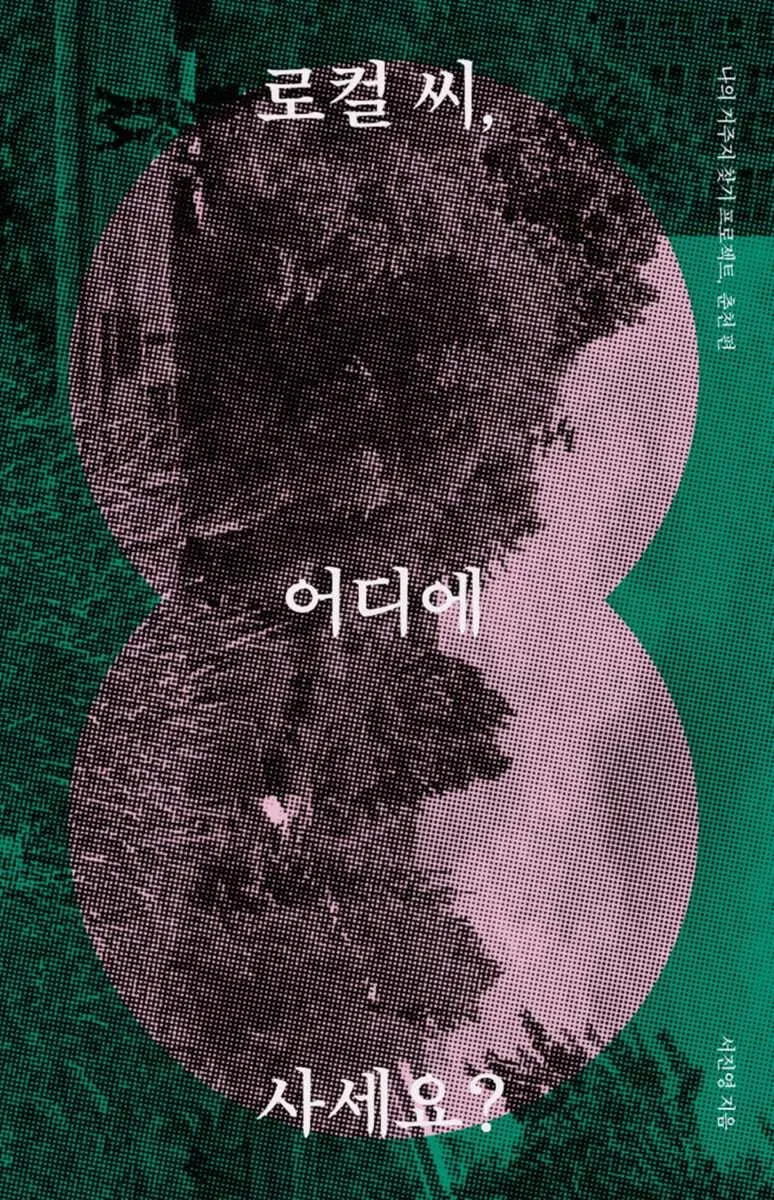
- How I learned about it: I saw it in the Annyeong Sijol newsletter and became interested.
- How I obtained it: I bought it at 'After the Rain Bookstore' in Suyeong-gu during a trip to Busan.
- Reading period: November 5, 2023 ~ November 26, 2023
How should I frame the boundaries of my life?
I stumbled upon this book in the newsletter, and even after seeing the title and table of contents, I wasn't particularly interested. Just another book about 'local' stuff, I thought. Oh, and the region is Chuncheon. That was the extent of my reaction. I was mildly intrigued that a new book about a region had come out. I had several trips planned to see performances in various places this fall. In early November, I went to Busan to see the musical ⟨The Legendary Little Basketball Team⟩ at the Busan Cinema Center's Sky Theater. I had some time before the show and wanted to give a book containing a letter to the friend I was with, so I went to a nearby bookstore. Stepping inside, ⟨Mr. Local, Where Do You Live?⟩ on the display shelf immediately caught my eye. Picking it up, I briefly read the prologue and found it more interesting than expected. Before buying a book, I usually read the prologue and then flip to a random page in the back to read a chapter or two to gauge interest. This book satisfied both criteria.
In the prologue, the author seemed rather displeased with the word 'local' in the book's title. So what is 'local'? I surmise it's meant to shed the restrictive or skewed image often associated with the term 'province,' aiming instead for a positive, sophisticated expression. But no matter how stylish the word's surface may be, unless people truly grasp its underlying meaning, it won't stick in their minds or convey its full significance. (p.6) It articulated precisely the uneasy feeling I had about the word 'local'. This is a book I absolutely must read. I had a strong feeling it would be a perfect fit for me. The author began writing about 'living' in Chuncheon after receiving a proposal from the Chuncheon Cultural Foundation and Ondra Press, commuting between Seoul and Chuncheon. Chuncheon was busy striving to become a 'cultural city' and a 'competitive local area' in its own way, while the publisher seemed intent on refining its own regional identity. It felt like heading toward a still-vague concept, like holding a train ticket where the destination's name was faintly erased. With that slight tension, I started traveling back and forth to Chuncheon. (p.9)
While reading the book, I had a chance to visit Chuncheon for a performance. Due to my next schedule, I could only stay briefly and left without having the chance to observe Chuncheon carefully through the lens of the book, which remains a great regret. Still, I did get to experience a little of what was the most interesting part of the book: the 'willingly accepting spirit' of the people of Chuncheon. Chapter 3, ⟨The Work of Creating Color⟩, mentions Chuncheon's mime festival and the city's spirit. Chuncheon is truly fascinating. How to put it… It seems to understand and welcome even the strange, the unusual, and the subtly peculiar emotions. (…) And the citizens react to it like this: "Check out this mime festival here." (p.102)
That sentiment—of viewing even unfamiliar new things favorably—was palpable in the performance space too. I went to Chuncheon to see the changgeuk ⟨My Name is Sabangji⟩. As a fan of Kim Su-in, the singer playing Sabangji, I wanted to see his voice and dance, even if it meant enduring the discomfort of the play's content. ⟨My Name is Sabangji⟩ is a changgeuk about the life of Sabangji, an intersex person recorded in the Annals of King Sejo, a real historical figure. It portrays the tragic life he endured due to his biological characteristics, and even viewed through a critical lens, it was not an easy subject. Yet, after the performance, the audience reaction was positive. While the actors and the power of the music certainly played a part, perhaps it was also influenced by Chuncheon's 'willingly accepting sentiment'?
It took me 22 days to finish this book. The writing flows smoothly, so it could have been read in three days. But during those 22 days, I traveled to Busan, then to Seongnam, then to Seocheon, then to Chuncheon, then to Daejeon, and finally back to Seongnam. As I wandered around the country, I pondered the questions the author poses to readers while walking through Chuncheon in the book.
- Where can I live, revealing my own unique color? (p.104)
- Could it be that I'm living my life matching its pace and rhythm to external circumstances rather than my own? (p.193)
- Where exactly are the boundaries of my life? (p.223)
Last year, I inherited the house in Seocheon, Chungcheongnam-do, where my grandfather lived. After he passed away late last year, the house became empty, and it often felt less like an asset and more like a burden. I should move to a company that allows remote work, go down to that house, and live there doing something meaningful. But can I really do that now? And wouldn't fixing it up cost a fortune? Was that even possible? The worries and anxieties weighing me down caused me immense stress.
I still don't clearly know what shape my life should take or what I truly want. Moreover, my current life wasn't even that unsatisfying, yet I kept getting swept up in impatience. Reading this book helped me let go of some of that pressure. I need to set aside the urgency that it must be now, the pressure to come up with a solution quickly. Like the author slowly exploring Chuncheon, perhaps I should carefully consider how I want to live, how I want to view my world, and how I want to shape the boundaries of my life.
Though unanswered questions still linger, I found myself thinking that next year, I too want to experience more regions over a longer period, walk through them, and broaden my world.